
Www.pwc.com/pcs. PwC Family Business. Survey 2012/2013. US findings. Playing their hand. US family businesses make their bid for the future ..
Join Seattle Business in honoring Washington's top family businesses! fba. Seattle Business magazine honored the impact and legacy of Washington state's top ..
www.pwc.com/pcs Playing their hand US family businesses make their bid for the future PwC Family Business Survey 2012/2013 US findings About the survey This report highlights the views of 100 owners, leaders, and top executives of US family businesses across a variety of industries. The interviews were conducted by an independent research agency from June through September 2012 via telephone. The US findings represent one component of PwC’s global survey of nearly 2,000 companies in 28 countries. For purposes of this survey, a family business is defined as one in which (1) the majority of votes are held by the person who established or acquired the company (or by their spouses, parents, child, or child’s direct heirs) and (2) at least one representative of the family is involved in the management or administration of the business. Contents Overview Current conditions Interview: Joe Sheetz of Sheetz, Inc. Intentions Interview: Chris McCormick of L.L. Bean 2013: Top five things to think about Conclusion 2 6 10 16 20 24 30 Overview When we last conducted our survey two years ago, US family businesses were warily eyeing their next big bet but hesitant to place it. Now they’re actively playing their hand. Two years after PwC last conducted its global family business survey, US family enterprises remain optimistic despite very real challenges ahead. They fully recognize that to thrive in a fast-evolving business landscape and still-uncertain economy, they’ll need to out-innovate their peers and seek new avenues of growth. Meeting these goals calls for entrepreneurship, which is a trait family businesses are known for — at least at their inception. Entrepreneurial instincts, however, aren’t necessarily passed down the family line. Our survey participants appear to have no illusions about this. Many of them question whether the next generation has the ability and desire to steward the business into the future. They’re especially concerned about whether potential successors have a knack for innovation, flagging this as a top challenge their companies will face in five years’ time (58%), surpassed only by economic challenges (66%) and price competition (61%). Economic challenges top the list of near-term concerns as well, with 68% of family businesses citing market conditions as a main issue for them over the next 12 months, though fewer companies registered concern this time around (88% flagged market conditions in 2010), suggesting that two years on, family businesses have adapted to the new normal of market volatility and economic uncertainty. Competition is another challenge that’s doing double duty as both a near- and long-term concern for family businesses. Increasingly, competition is coming in the form of aggressive, well-funded companies that are entering the US market from China and other rapidly growing economies. Business as usual won’t suffice if family firms are to maintain — and grow — market share while dealing with this new breed of competitor. Differentiating themselves will require creating new products and services, improving current offerings, and finding new ways of engaging with customers. In some cases, it may even entail adopting an entirely new business model. Competition from abroad is just one side of the international equation. Nearly half of US family businesses are venturing abroad themselves, selling goods and services outside their customary domestic markets. Fifty-four percent also expect they’ll be selling internationally in the future. This is a striking increase from two years ago when just 30% of US respondents said they were planning to develop business in markets abroad. The figure was a mere 21% in our 2007 survey. Top challenges for US family businesses over the next five years General economic situation Price competition Need to continually innovate Attracting the right skills/talent 66% 61% 58% 52% Percentages reflect the number of businesses citing these issues as major challenges over the next five years. Overview 3 Risk tends to be part of the bargain when a company seeks to increase its competitive edge, either at home or abroad. And yet risk-taking is often seen as somewhat contrary to the family-business ethos of protecting and preserving a legacy for future generations. This, coupled with a strong sense of commitment to their employees and the freedom to take a long-term approach to corporate strategy (rather than chase near-term results to meet quarterly earnings expectations), may give the impression that mature family businesses generally err on the conservative side when it comes to risk. “The patience that owners can exercise is a critical factor. We are not managing quarter to quarter, and shareholders are not necessarily a primary stakeholder for us. Our job is to grow the business the right way, which enables us to experiment and innovate. It makes for a different atmosphere.” Third-generation US family-business executive What we’re seeing among our familyRisk self-assessment business clients in the United States, Many family businesses think they take on more risk than other types of businesses however, is that patience and preservation are not synonymous with risk-aversion. 42% of family businesses agree that they tend to take on more risk than other types of businesses 37% are neutral 21% disagree 4 PwC Playing their hand Consider L.L. Bean, for instance. The outdoor clothing and equipment retailer entered the Chinese market a few years back and has no intention of pulling out, even though the company has generated only one-third of the revenue it had originally expected from its China stores and does not anticipate that those units will produce significant revenue in five years’ time. “We want to stay in China,” says L.L. Bean’s CEO, Chris McCormick. “It’s important, even if it means being there at a loss for a period of time.” For a company that recently celebrated 100 years of home-grown success, L.L. Bean might easily have chosen to rest on its laurels rather than venture into a new, complex foreign market. That the company has taken the latter course belies the truism that well-established family businesses like to play it safe. “A family-held business is seen as being around for a long time. To be around for another 100 years, we have to invest in the future, take chances. The family understands that.” Chris McCormick CEO, L.L. Bean And yet is it safe to ignore growth opportunities in one of the world’s largest markets, especially as growth in the United States and other mature economies remains stagnant? Likewise, is it safe to delay developing new products or wait to explore new business models until greater economic certainty returns? The family businesses we work with are increasingly concluding that the answer is no. To them, the riskier choice is to stick with the status quo. A greater willingness to gamble on new ventures and ideas marks an attitudinal shift since we last surveyed family businesses. Two years back, family businesses were warily eyeing their next big bet but proving hesitant to place it. Now they are actively playing their hand. They are not placing their bets recklessly, however. Family businesses know that to make their bets pay, they will need to harness the right blend of talent, innovation, and leadership. In the following pages, we’ll look at how they’re rising to the challenge and what they can do to improve their odds. “We’re constantly looking for the next big thing. It’s like changing the tire on your car without stopping. Some might call that exhausting. For us, it’s energizing.” Joe Sheetz, Executive Vice President, Sheetz, Inc. Overview 5 Current conditions Steady growth Most US family businesses performed well over the past year, with nearly three-quarters of them experiencing sales growth. Roughly one-third said they had grown a lot. Looking ahead, almost all US family businesses are confident about growth for the next five years — 93% of US respondents, compared with 81% of their family-business peers globally. Aggressive growth, however, is not expected. Only 11% of US family businesses expect to grow quickly and aggressively over the next five years. Most (82%) are aiming for steady growth. Recent performance Nearly three-quarters of US family businesses saw sales growth in the past year Negative growth 17% 29% No growth 10% Grown a lot 44% Grown a little Growth expectations US family businesses are confident about growth, though most expect it to be steady rather than fast Confidence in revenue growth over the next five years Very confident Somewhat confident Planned growth for the next five years Aggressive growth Steady growth 39% 58% “The biggest challenge for us is to match growth to capital, so we need to grow the business in order to use up the capital being generated by the company.” William Elliott, President Elliott Electric Supply, Inc. 11% 82% Current conditions 7 “Family businesses are closely knit, with an integrated structure that makes employees feel as though they’re not just numbers.” Robert Simon, CFO Contractors Steel Company Challenges That companies are expecting to grow steadily rather than rapidly is not surprising. Various headwinds remain strong. Chief among them are tough competition and still-uncertain market conditions, as we noted in the report’s overview. There is also the ongoing challenge of finding workers with the right talents and skills. Meeting this third challenge is critical for companies looking to innovate their way past the competition and continue powering growth in a slow economy. Closing the skills gap Closing the skills gap has been a persistent challenge for family businesses (evidenced in three consecutive surveys), as well as for companies generally.1 Manufacturing businesses, in particular, are in need of workers with highly specialized skills — the kind requiring education beyond high school. To run the highprecision machinery and technology that will keep US manufacturers competitive, more American workers will have to retool themselves with STEM (science, technology, engineering, mathematics) skills. Mind the gap Family businesses worry about how to fill the skills gap now and in the future 52% worry about filling the gap in a few years 2012 2017 46% worry about filling the gap right now 1 “Talent Riddle: Where Are the Workers Who Will Power Growth?” Growing Your Business, PwC, 2012 8 PwC Playing their hand Across the country, states have begun to redress the problem by creating public-private partnerships (among other types of programs) that match workforce training with the vocational needs of local manufacturers. Community colleges are especially active in these partnerships.2 Here is where family businesses can play a decisive role, especially since many of them already have close ties to their communities and a strong sense of responsibility toward them. Indeed, almost all the US family businesses we surveyed say they believe their companies play a vital role in creating jobs and growing the economy. The opportunity to devise creative solutions to the talent challenge is hardly limited to manufacturing companies. At Sheetz, Inc., a regional chain of convenience stores providing gasoline and made-to-order food,3 the recruiting department has focused on tapping job seekers who are not actively looking for work — a sizable demographic, the company suspects, and one likely to include technically savvy, multitasking Millennials who’d be adept at both interfacing with Sheetz customers and mastering the company’s computerized systems (e.g., registers, kitchen monitors). Through social media channels such as Twitter and Facebook, the company posts updates about job vacancies, job fairs, and open interviews, as well as shares interview tips. Sheetz has also worked with the local community to help educate the company’s workforce, negotiating with several colleges and universities to offer tuition discounts to Sheetz employees. “I’m proud to work for a family business that is contributing towards where I live and the betterment of my country.” Ana Bonilla CFO, GFR Media US family businesses feel they play an important role in job creation and add stability to the economy 90% of US family businesses think they play an important role in job creation 86% feel they add stability to the economy 2 3 10Minutes on US Manufacturing Resurgence, PwC, 2012 Sheetz, Inc., is headquartered in Altoona, PA , with operations in six other states, including North Carolina and Virginia. Current conditions 9 Interview with Sheetz, Inc. Executive Vice President Joe Sheetz The Sheetz family has run their Pennsylvania-based chain of stores since the company’s inception in 1952, with 434 locations across six states. Each Sheetz store offers made-to-order food, specialty beverages, gasoline, and convenience store items. Joe Sheetz is among the second generation to manage the business. In October 2013, he’ll assume the role of CEO and president. He recently took time out to talk with us about growth, innovation, and talent — top areas of focus among this year’s survey participants. Growth is top of mind for many family businesses these days, despite ongoing economic uncertainty. Nearly all the US family businesses we surveyed anticipate growing over the next five years. What are Sheetz’s plans for growth? Although we, like everyone, felt the impact of the recession, our company had two or three of our best years ever in the period spanning 2009 through 2011. We accelerated growth when most people stopped. In some markets we literally were the only people doing anything as far as growth, which meant we were able to get the best contractors, great deals, good timing, and good pricing. We didn’t pursue this course in a reactive way. We had a fiveyear growth plan that we’d agreed on before the economic downturn. We said, “We’re going to add this many stores per year, and they’re going to be in these markets.” We’ve stuck with that plan and are benefiting greatly as a result. Now we have approximately one hundred more stores than we had five years ago, and they’re that much more mature and closer to adding to the bottom line. 10 PwC Playing their hand It would have been very difficult to catch up if we’d deviated from that plan. I’m seeing it right now, people who are feeling like it’s time to start growing again, but it’s taking them two years to ramp back up because they spent four or five years not doing anything. That said, I think if we were a public company, we would have been hard-pressed not to pull back at the beginning of the downturn and say, look, things appear pretty uncertain right now, let’s wait or cut back — and again, in 2012, when gasoline prices went up significantly. So being a private company has been hugely beneficial for us these past several years in that it’s allowed Sheetz to maintain a long-term outlook. By sticking to our long-term outlook, we’ve been able to keep our momentum. We’re opening 34 new stores over the next year. Roughly eight of them will be replacing old stores, and the rest will be new sites. North Carolina, in particular, is where we’ll be expanding the most over the next several years. We ultimately plan to add about 100 stores in the state’s northern tier. As with all our expansion efforts, we’re chasing that hardto-define thing called critical mass. It’s not the same number in any two markets. But from past experience, we think that if we have 100 stores in that particular region of North Carolina, people there will begin to recognize our name. So we want to get to that number quickly. And, of course, we also need to get customers in the door, so they can see that a Sheetz is more than a gas station. When we reach that point — critical mass and enough customers coming inside — we’ll reevaluate whether we should still be growing that fast in North Carolina, or start to grow a bit more in one of our other states, such as Ohio, or possibly move into a state we haven’t touched yet. Roughly half of the US family businesses we surveyed are selling internationally. Does Sheetz have plans to expand into markets abroad? Not at present. We’ve committed to growing just 15 to 20 miles at a time, particularly since we do much of our own distribution. That includes fuel distribution and the daily delivery of fresh-made food. It’s all so interwoven now that it’s hard for us to make big geographic leaps. That doesn’t mean we’ll never expand outside the United States, but going abroad isn’t in our growth plan right now. Innovation and technology are key areas that US family businesses say they need to focus on to keep their companies relevant and successful. How is Sheetz harnessing technology? We’ve done a lot with technology over the years. We were the first retailer to offer a PayPass card that has RFID technology, as well as one of the first retailers to offer pay-at-the-pump gas at all our retail locations. But in the end, we’re not a technology company. We’re a retailer that wants to use technology where it makes sense. Sometimes we’re an early adopter, but for a lot of things we’re a fast second mover. We’d rather have somebody else prove that the technology works. Once that happens, we jump in pretty quickly. Because we’re owner operated and not a franchise, when we make a decision to run a certain technology in Store A, we run it in all 434 stores. A lot of our competitors grow through acquisition, and they’re running five different cash-register systems, and they’ve got three different ways that people do their daily checkout at the end of the day, because that’s just the way they’ve grown, and they’ve never gone back. Often we’ll have a test period first. When our tests go really well, there’s a heck of a lot of momentum to get the new technology out the door. But the pace doesn’t always depend on how quickly we can refine the technology. Much of the time it’s about figuring out how the stores will stage it all. You know, if somebody orders a hot item on their mobile device, how do you know when that person is coming? How early do you want to make the item? The operationalization of the technology can be more challenging than the technology itself. In the end, it’s got to be simple, otherwise we can’t execute it. If we can’t execute it, why do it? Customers are going to be upset. We try to use technology to make our customers’ lives and our employees’ lives better, not because people can say Sheetz has a cool thing. That’s why we’ve waited to come out with a Sheetz app, because we want our app to give the user real value. Interview with Sheetz, Inc., Executive Vice President Joe Sheetz 11 There’s also the data side of things to consider. The enormity of data we obtain through our loyalty cards alone is mindboggling. The challenge is to mine the data and be able to put things into buckets and to be able to say, “We’re going to try X with this group, and we’re going to try Y with that group, and then we’re going to watch what works and what doesn’t work, and ultimately try to change customers’ behaviors.” That’s the infrastructure and business intelligence piece that’s being built, not only by us, but by a lot of people. What about non-technological innovation? For us, it’s a nonstop race to put whatever’s fresh and new out there. We constantly have to be out in front of the younger consumers. If you go look at our beverage coolers every three months or so, you’re going to see pretty significant changes. The waters change, the energy drinks change, the organic drinks change. We always stock the staples, but then there’s this constant push for what’s new, what’s exciting, because that’s what young consumers like. We try hard to do our research and development based on them. Ultimately, you have to be willing to try stuff, take risks, knowing that if you add 15 new items, 10 of them aren’t going to make it. That’s one reason our venders and suppliers like to work with us — they know we’ll try anything, within reason. Our vision is to create the company that’ll put us out of business. People say, “Well, you know, you used to be a gas station, or you used to be a convenience store, so how did you get into serving food, and then making the food, and ultimately creating new food items…?” Every change our business undergoes is customer driven. It’s us listening to what customers say and filling the need they have. But who knows what they’ll need five years from now? We’ll have to reinvent ourselves yet again. It’s like changing the tire on your car without stopping. Some might call that exhausting. For us, it’s energizing. Talent remains a top challenge for family businesses — in terms of both finding workers with the right skills and developing the leadership pipeline. Has Sheetz’s rapid expansion posed workforce challenges for the company? There’s constant pressure to find really good, qualified people who understand and share our values. We employ over 15,000 people. If we open a new unit, it might have 40 or 50 employees, and so it’s not unheard of for us to hire more than 1,000 people for new positions in a single year. Finding good workers becomes especially critical — and challenging — as we expand farther from home. When we arrive in a new market, nobody knows that Sheetz is actually somebody’s last name. People don’t realize it’s a family business. They think it’s a franchise. So if they don’t know what a Sheetz is, or what the company’s all about, they’re not interested in applying for a job with us. We have a little selling to do, a bit of PR effort. That also goes for attracting new customers in those markets. We depend heavily on our local management teams in the stores to be a conduit to the community. As a result, we believe strongly in having our people live in the community where they work and being involved in it, whether it’s through fundraising for a local cause or sponsoring a charity event. 12 PwC Playing their hand For us to be able to hire and retain workers with that kind of focus and commitment, we need to make Sheetz an attractive place to build a career. There are various ways we do that. One way is through our tuition reimbursement program. As a result, many of our people are college educated — very sharp individuals who are good at managing people. We provide a lot of them with careers, and not just careers at the stores — careers in distribution, careers in purchasing, careers in real estate, you name it. What about Sheetz’s leadership pipeline? We’re in a transitional period right now. When Sheetz’s new fiscal year starts in October 2013, our CEO and president of 17 years, Stan Sheetz, will become chairman of the board, and I’ll step into his vacated position. A couple of the younger family members came back a few years ago after working elsewhere and getting MBAs. Now there are roughly half a dozen of us managing the business. Half a dozen may sound like a lot, but when you have 15,000 employees, that’s nothing. So we’re thinking about ways to strengthen the leadership pipeline. Although we’re feeling pretty certain that we’ll have a family CEO 20 years from now, there’s the question of what happens two generations down the line. One way we plan to address that question is through our new family council. We’re in the early stages of creating the council, which will be chaired by Steve Sheetz, who’s currently the company’s chairman of the board. One of the key roles we envision the family council playing is educating younger family members in how to help run the company. Part of that will involve designing plans and programs meant to give upcoming generations the proper education, training, and work experience. We want younger members of the family to be equipped to come back and help lead the company. We’re trying to go at it from a 30-year perspective. The ideal outcome would be that family members currently heading for college will be viable candidates for the CEO role when they reach midlife. Regardless, we will always keep a heavy family influence in the business. One of the biggest challenges for us as we’ve grown has been to keep Sheetz’s culture family oriented, flexible, and non-bureaucratic. We want to make sure we don’t turn into the kind of nameless, faceless organization that a lot of companies become as they grow. It’s important to us that the company’s values and the family’s values stay aligned. Interview with Sheetz, Inc., Executive Vice President Joe Sheetz 13 Navigating risk in the global supply chain While finding workers with the right skills remains a top challenge for family businesses now and in the long term, other headwinds have diminished. Concerns about cash flow and controlling costs and about capacity and meeting orders have dropped dramatically in the two years since we last surveyed family businesses. In the meantime, supply-chain concerns have risen somewhat — but clearly not enough to rock family businesses’ regained confidence in their ability to maintain capacity. The rise may stem primarily from the increasingly global (and hence complex) nature of today’s supply chains. Even if a business sells, manufactures, and sources exclusively in the United States, it is not immune to vulnerabilities in global supply chains — quite likely some of its suppliers’ suppliers reside outside US borders.4 The fact that a rise in concern about supply chains has corresponded with a counterintuitive decline in concern about maintaining capacity and meeting orders suggests that family businesses have taken protective measures since we last surveyed them. Those measures may have been prompted, in large part, by supply-chain casualties suffered in the wake of the global financial crisis, when insolvency drove many suppliers out of business.5 Diversification was no doubt among the protective measures taken. By diversifying its supplier base, a company helps ensure that if one or two links in the supply chain were to suddenly break, the business would still be able to meet customer demand. Diversification notwithstanding, disruptive events both here and around the globe these past couple of years — ranging from the flooding in Japan and Thailand in 2011 to the flooding in New York and New Jersey in 2012 — have stretched certain supply chains thin. There is nothing to suggest that the frequency and magnitude of such events will decrease in the future. It comes as no surprise, therefore, that more than one-quarter of family businesses think issues with suppliers and supply chains will pose a substantial challenge five years out. In fact, what’s surprising is that the percentage isn’t higher, signaling a potentially dangerous disconnect between perceived and actual supplychain vulnerabilities. Top internal challenges — 12-month outlook Most internal near-term challenges have waned for family businesses since 2010, though talent remains a key concern and supply-chain issues have increased somewhat Finding skilled workers 46% 13% 10% 14% 6% 37% 42% 52% Supply-chain issues — 5-year outlook Cash flow/controlling costs Capacity/meeting orders Raw materials/supply/quality of family businesses think that supplychain issues will pose a substantial challenge in five years’ time 2010 2012 Percentages reflect the number of businesses citing these challenges as among their top three “internal issues” for the next 12 months. 4 5 “Risk Resilience: Reckoning with a New Era of Threats,” Growing Your Business, PwC, 2012 10Minutes on Supply Chain Risk Management, PwC, 2009 14 PwC Playing their hand Weighing the role of government The companies we surveyed have mixed feelings about the role government should play vis-à-vis family businesses. For instance, although a mere 9% of family businesses said taxes were among their top three “external issues/ challenges” for the next year (down 10 points since our last survey), they did voice a strong desire to see the inheritance tax go away and for the tax code overall to be simplified. As the leader of a fourth-generation family-owned producer of copper with more than $1 billion in annual revenue put it, “Government should reduce the tax burden on family businesses so that we can effectively pass on the business to the next generation. That means lowering the inheritance taxes or capital gains taxes so that family businesses do not find themselves in the position where they have to sell the company.” His sentiments were echoed by many of our survey participants. Government policy overall (regulation, legislation, and public spending) is of greater concern to family businesses than taxes per se. While a good many family businesses expressed displeasure over what they consider government interference (e.g., the Affordable Care Act, minimum wage), they also voiced a desire for government involvement in retraining the workforce, creating incentives for new product development (e.g., additional tax credits for investment and for research and development), and making it easier for businesses to access capital. “A key way that government could help family businesses is to create the right skills at the education level and make education more science driven.” Bharat Agrawal Director and founder, The Dotcom Team, LLC Policy watch “Clean up the US tax code, make it simpler and more straightforward.” Tom Traylor, Vice President and Chief Development Officer, Traylor Bros., Inc. of family businesses rank government policy among the top three “external issues” that will affect them in the next 12 months Current conditions 15 Intentions Renewed commitment Family-business leaders are feeling optimistic again about the future of their companies as family enterprises. Contrast that with the mood of survey participants in 2010: At the time, just 55% of family businesses said they planned on handing the reins to the next generation. This was a significant drop from the 72% voicing such plans in 2007. The downswing hinted at reservations about long-term growth prospects for the economy and the ability of family businesses to thrive in it. In this latest survey, the pendulum has swung back. Seventy-six percent of family businesses now say they plan to keep things in the family. Having successfully weathered the past couple of years (during which the US economy did not slide back into recession, as some had feared it would), family-business owners are renewing their faith in the staying power of their companies. That said, just over half of family business leaders (52%) intend to pass both ownership and management of the business to family members. One-quarter plan to pass on ownership but bring in outside management to run the company. Lifecycle of a family business US family business snapshot Family-run for two or more generations Ownership change anticipated within approximately five years Contemplated form of ownership change Pass the business on to the next generation to own and run Pass the business on to the next generation to own but not run Sell to another company Sell to a private equity investor 4% 12% 24% 52% 25% 81% Intentions 17 New direction The decision to bring in outside management signals a sea change. At present, just 7% of the businesses we surveyed are led and run by people other than family members. But to succeed in the 21st century, companies must continually innovate, and that calls for considerable entrepreneurship, motivation, and leadership skills. Innovation imperative Embracing fresh ideas Although innovative thinking and entrepreneurial instincts were qualities that helped the founders of the business launch and build a successful company, those characteristics weren’t necessarily bred in the bone. This fact is not lost on family-business leaders, who voice skepticism about whether innovation is indeed in the next generation’s DNA. Concerned that junior members might not have the drive and aptitude to steward the business into the future (50% of survey participants), family businesses are increasingly looking outside the family for the kind of fresh thinking and vision that will propel their companies into the future. 69% of family businesses feel they are more entrepreneurial than other companies ...but “Typically, succession issues are the biggest problem — having family that is capable of running the business and managing the transition from one generation to the next.” William Elliott, President, Elliott Electric Supply, Inc. 58% view the need to continually innovate as a major challenge “Family businesses have a tendency not to look for talent outside the family. This limits their exposure to fresh thinking and makes them less willing to embrace new ideas.” Gilbert Cohen, CEO, Cohen’s Clothiers Recurrent reinvention 46% of family businesses feel that family businesses reinvent themselves with each new generation ...but 31% worry that having family members in key positions makes the company less open to new ideas 18 PwC Playing their hand Seeking new horizons A key route that family businesses are taking to the future goes through international markets. Nearly half (47%) of US family businesses are currently selling goods and services outside the country, and even more (54%) expect they’ll be selling internationally by 2017. This is a considerable leap from two years ago when just 30% of US respondents said they were intending to develop business in markets abroad, and an even bigger jump from our survey in 2007, when only 21% of family businesses planned to invest in business development outside the United States. Top foreign destinations for US family businesses are the Americas (primarily Brazil, Canada, and Mexico) and the Asia Pacific region. China is the number one country on the itinerary — 14% of survey participants with global intentions plan to sell in that market five years from now, while more than one-quarter of internationally bound respondents are setting their sights on the Asia Pacific region overall. Thirty percent are aiming for the Americas, and 14% are eyeing Europe. Despite family businesses’ decisive uptick in international activity, they say that sales abroad account for just roughly 7% of their sales overall, and they don’t foresee that changing much (they anticipate a 10% contribution in five years’ time). That picture may change if economic recovery in the United States remains slow and the demand for US goods in fast-growth markets abroad keeps rising. PwC’s ongoing research shows that private companies selling abroad expect roughly 20% of total revenue to come from international sales over the next year.6 For the most part, those companies are also growing faster than their domestic-only peers, projecting a 12-month revenue growth rate of 9.7%, versus 6.9% for domestic-only businesses (private companies selling in key emerging markets project 11.3% growth). This has been a fairly consistent trend for several years now.7 With new opportunities abroad come new challenges, which companies will have to negotiate effectively if they are to succeed. Having the right talent on hand is crucial to this endeavor. “We need to find the right people in the right regions of the world,” says a top management member at a firstgeneration, family-owned aircraft company interviewed for our survey. “Those people will need to know more than just the art of selling. Keeping up with the varied legal requirements and dealing with the different tax regimes are equally important.” Top destinations Where US family businesses say they plan to be selling by 2017 Americas Europe Asia Pacific Broadening horizons The percentage of US family businesses planning to sell abroad has risen substantially in the past five years 54% 30% 21% 14% 30% 26% Percentages reflect respondents who say they plan to be selling in international markets by 2017. 2007 2010 2012 6 7 Trendsetter Barometer Business Outlook, PwC, 2012 — The survey is conducted quarterly. Trendsetter Barometer Business Outlook, PwC, Summer 2012 Intentions 19 Interview with L.L. Bean CEO Chris McCormick Chris McCormick is the first non-family member to run L.L. Bean’s century-old business of making and selling apparel and gear for outdoor enthusiasts. He joined the business in 1983 and has served as president and CEO since 2001. Chris recently took time out to talk with us about growth, innovation, and talent — top areas of focus among this year’s survey participants. Growth is top of mind for many family businesses these days, despite ongoing economic uncertainty. Nearly all the US family businesses we surveyed anticipate growing over the next five years. What are L.L. Bean’s plans for growth? Our balance sheet is strong, which allows us to invest in future growth, including opening more stores domestically, expanding internationally, and growing our online presence. Because we’re a privately held company, we can take a longterm approach to these growth initiatives. We don’t play to the Street or to the quarterly results cycle. In fact, in 2010 we went to the board and recommended that L.L. Bean have an investment year and allow profits to fall. We needed to make a big investment in marketing and in attracting younger customers, and the board agreed. 20 PwC Playing their hand Roughly half of the US family businesses we surveyed are selling internationally. What role do international sales play in L.L. Bean’s business strategy? L.L. Bean sells to customers in 160 countries, mostly through catalogs and the website. Our stores outside the United States are concentrated in Japan and China. We first entered the Japanese market a few decades back, through a joint venture. During the 1980s, an enthusiasm for American goods swept Japan for a number of years, which gave a real boost to our brand in that market. Our Japanese stores continue to be profitable, even though Japan’s economy is struggling right now, and so we’re looking at further expansion. We entered China in 2008, also through a joint venture. We have about 80 stores there now. Many of them are quite small — little boutiques in department stores. Overall, they’re not turning a profit for us yet. A big part of the equation is finding the right strategic partner — one who understands our business, knows the Chinese market well, is connected to the right dealer network, and has the necessary infrastructure in place. We understood this before entering China, and so we chose a Chinese partner who had worked there with one of our US competitors for a number of years. That said, China is a vast and complex market, so now we are actively talking with other potential partners and looking at other business models. We want to stay in China. It’s important, even if it means being there at a loss for a period of time. We just have to figure out how best to do it and mitigate some of the risk. In the near term, the Chinese market presents a good opportunity for us to do reverse innovation. Our customers are quite young in China — around 25 years old — and very in tune with Western culture and fads. So our plan is to develop styles that appeal to this demographic, test-drive those styles in our Chinese market, and then ultimately bring the successful ones to the United States to attract young consumers here. Innovation and technology are key areas that US family businesses say they need to focus on to keep their companies relevant and successful. How is L.L. Bean harnessing technology? A lot of our technology investment is on the web. The average age of the web customer is much lower than our other customers. So we’re using the web as a way to try to attract younger consumers and get them involved in the brand. One recent example was our Million Moment Mission campaign, which encouraged L.L. Bean fans to share outdoor moments via social media channels such as Twitter, Facebook, and YouTube. For each moment shared, we donated $1 to the National Park Foundation to aid programs that encourage and enable youth to enjoy the outdoors. We reached our $1-million goal in October 2012. Although the younger customers we reach through social media currently make up a small segment of our overall customer base, we recognize the need to transform from a catalog mentality to a web mentality. In many ways, a web mentality is similar to a retail-store mentality. There’s much more direct interaction with an online customer than with a catalog customer, and you have to respond very quickly. Back in the old days, we would put out a catalog and wait six months before changing our product. Nowadays, if we see that a shirt has received a two-star rating on our website, we pull the product off the site. Selling across multiple platforms takes considerable effort, but we don’t plan to reverse course. We’re a heavily datadriven company. We do all the economic analysis, which shows a customer who buys from multiple channels is worth X amount more than another customer. So at the company, there’s uniform buy-in for a multiple-channel approach. Interview with L.L. Bean CEO Chris McCormick 21 Mobile devices play a role in that, naturally. Smartphones and tablets make up roughly one-third of our online traffic. We have a mobile website, and we’re also modifying our main website to accommodate the tablet. At the moment, however, people visiting us via mobile devices are primarily seeking information — checking product reviews and ratings or looking for a store location. They tend to go to another channel, such as our website or a retail store, to make an actual purchase. Other initiatives we’re pursuing on the technology front are major IT-system upgrades to increase productivity and profitability. For example, two years ago we started what we call a mind-to-market process, which focuses on how we develop our products and get them to the market. This was in response to the fact that it would take anywhere from 12 to 18 months’ lead time to develop, say, a new boot and get it in our warehouses. We would have to forecast and buy the inventory before we’d even have a read on how the product line was likely to do based on the current performance of a similar line. So our goal was to cut our lead time by at least one-third. A big focus this year is to develop systems that will support processes for increased productivity in other areas as well. We believe that these improvements will ultimately result in significant savings that we can put toward future growth initiatives. What about non-technological innovation? I would say that one of the most brand-defining ways we’ve been innovative is through our Outdoor Discovery Schools. The schools offer 100 different trips, tours, and classes, ranging from snowshoeing to fly-fishing. We added 40 new adventures in 2012 alone. Over 25,000 people went through an Outdoor Discovery School class this past year. Customer satisfaction is very high — we see this in the questionnaires we ask people to fill out after they take a class. The program generates a lot of word of mouth. Having that brand experience makes you a better customer. We know that. We can monitor the economic value of it. So now we’re thinking of developing a business plan around the Outdoor Discovery Schools, expanding the program nationwide — independent of the stores — to introduce more people to the L.L. Bean brand and attract a younger consumer. So far, the average age of class participants is forty. We can capture those names, those customers. We’ll be doing a lot more of this type of thing. It’s part of our customer initiative. Talent remains a top challenge for family businesses — in terms of both finding workers with the right skills and developing the leadership pipeline. Has L.L. Bean’s focus on technology made it necessary to bring new skills into the company’s workforce? Transforming our company from a catalog mentality to a web mentality has required that we also transform our customer-service skills to some extent. We do a great job on the phone, where there’s genuine one-on-one interaction, but it’s harder to execute that level of service online, where we’re limited to the chat box and email. Shortly before the 2011 Christmas season, we added a 10-member team to our e-commerce department to interact with customers on social media platforms like Facebook and Twitter. The team has done a good job of responding quickly to customer service inquiries, but our overall customer-service scores are lower for online than for our stores and catalogs. So our challenge right now, and our focus, is to become the best in customer service online, transferring the personal touch we have on the phones to the web. 22 PwC Playing their hand It really comes down to having a consistent message and delivering a consistent experience to the customer. But it’s more than just being consistent across sales channels. It’s about being consistent over time. That consistency is a key quality that distinguishes L.L. Bean from many of its competitors. The principles that the company’s founder, Leon Bean, established over 100 years ago are the principles that guide the company today. They aren’t going to vary, because they’re instilled in the company’s culture. You can see those principles in the company’s stakeholder philosophy. A key tenet of the philosophy is that to sustain success over time, L.L. Bean has to further the interests of all its stakeholder groups. Those groups include not only customers, but also employees. And so we share our profits with our employees and give to their communities. That’s part of our brand and integral to the core set of values we live by. When we hire people, we’re looking for job candidates who share those values. What about the leadership pipeline? The benefit we have is the consistency of leadership here. Again, this is due to the principles that L.L. Bean’s founder instilled in the company a century ago. The founder’s grandson, Leon Gorman, chairs the family board of directors, following his 40-year leadership of the company as president and CEO. Leon oversaw the seamless transition of the president and CEO role over 10 years ago. Similarly, he is preparing for an eventual transition of family leadership. He has established a three-member family governance committee made up of fourth-generation family members. The mentoring and development process is under way as family members remain active in board and committee matters, and now the fifthgeneration of family are becoming involved with orientation sessions around the business and learning opportunities about their future responsibilities. At the executive level, we have a very structured leader development process, with each of our current senior leaders being reviewed and evaluated on their contributions to preparing leaders to assume these senior roles. This process has been moved down through the organization, with leaders at all levels expected to contribute to succession planning. While we’re being very structured about our leadership development, this is not a political environment. At L.L. Bean, we’re very much a team, with a great deal of respect for people. Interview with L.L. Bean CEO Chris McCormick 23 2013: Top five things to think about Family businesses clearly have any number of things to think about in the year ahead. While much of their focus will be directed by each business’s sector, size, and region, among other company-specific factors, we think that the following five areas merit special attention by family businesses overall — based on what they themselves have told us in this survey and in our ongoing work with them. Innovation Innovation is critical to keeping family businesses relevant. To derive enduring value from their innovation efforts, family businesses will need to look beyond quick wins and ask themselves where they’d like their company to be 10 years from now. Because privately held family businesses are not constrained by quarterly earnings pressure, they have more time to show a return on their innovation investment. This gives them room to experiment, take risks, make mistakes, and refine their approach so that it includes the right mix of incremental and breakthrough innovations. A key ingredient to innovating successfully is tying your innovation strategy to your business goals. Also bear in mind that how you innovate determines what you innovate. Trying to drive breakthrough innovations with a process designed primarily to develop and commercialize incremental innovations is unlikely to yield positive results. Above all, innovation is a team sport. That means fostering a company-wide culture of innovation. How? By setting the tone at the top and incentivizing innovation all the way down to your entry-level workers — who might, incidentally, turn out to be the mostinnovative employees of all.8 “When you’re fighting the big dog, you have to be a little more innovative.” Second-generation beverage distributor 8 “Innovation Imperative: Keeping Your Company Relevant,” Growing Your Business, PwC, 2012 2013: Top five things to think about 25 Technology For companies to innovate successfully nowadays — or function, for that matter — they need the right technology. Notably, almost 40% of family businesses say that the need for new technology will be a substantial challenge for them in five years’ time. Technological advances (e.g., SMAC — social, mobile, analytics, and cloud) have changed the state of play for businesses in general and for midsize private companies in particular. What privately held family businesses are finding is that new and evolving technologies are leveling the playing field for them, allowing their companies to do things on a scale that in the past would have been cost prohibitive. Now, with the help of cloud computing,9 mobile devices, and social media, midsize companies are catching up to their public counterparts. In fact, many of them are not only catching up, they’re at the head of the pack. Take social media, for instance, where family businesses have been entrepreneurial in casting a wide marketing net at relatively little cost. In the process, they’ve obtained vast amounts of data on their customers’ habits and preferences.10 When it comes to early adoption, however, family businesses and midsize companies often like to let larger companies make the initial investment and work out the new technology’s kinks — a process that doesn’t take long these days. “When it comes to technology, sometimes we’re an early adopter, but for a lot of things we’re a fast second mover. We’d rather have somebody else prove that the technology works. Once that happens, we jump in pretty quickly.” Joe Sheetz, Executive Vice President, Sheetz, Inc. Tackling technology “A critical challenge is keeping up with technology, since it could redefine how our business will be conducted in the future.” Third-generation supermarket supplier/ distributor 39% of family businesses say that the need for new technology will be a substantial challenge for them in five years’ time 9 “Cloud Computing: Why It Matters to Your Business,” Growing Your Business, PwC, 2011 10 “Innovation Imperative: Keeping Your Company Relevant,” Growing Your Business, PwC, 2012 26 PwC Playing their hand Talent Putting technology to innovative and entrepreneurial use means having the right talent on hand. Workers skilled in data analytics are in especially high demand. Without them, the tremendous amount of customer information that family businesses collect via social media, mobile devices, and other technological means cannot be effectively mined and put to profitable use. While the joke often goes that it’s the kids who best know how to work new technology, only 29% of family businesses say that young people entering the job market in their sector have the right skills and education. Family businesses may increasingly try to be part of the solution via on-the-job training and partnering with local schools to help ensure that the up-and-coming workforce has marketable skills. Nearly all the companies we surveyed (90%) think family businesses play an important role in job creation, and most (84%) feel a responsibility to support employment in the areas where they operate. However, they also feel that government could be doing more, particularly when it comes to investing in the future workforce and incentivizing hiring and job creation. Family businesses must do more than just attract the right talent; they also need to retain it. This poses special challenges in today’s workforce, which contains four generations at once. While the needs, wants, and expectations of Generation X may overlap with those of the Baby Boomers and Millennials, they are also distinct in many respects. Juggling these is a tall order but one that companies will have to execute successfully if they are to thrive in the 21st century.11 “Helping train young people is a key way that government can help family businesses.” Gilbert Cohen CEO, Cohen’s Clothiers Tackling talent 52% of family businesses think that the ability to retain key staff will be a substantial challenge in five years’ time 11 “Talent Riddle: Where Are the Workers Who Will Power Growth?” Growing Your Business, PwC, 2012 2013: Top five things to think about 27 Succession planning Thirty-eight percent of the family businesses we surveyed say that succession planning will pose a substantial challenge for them in five years’ time. This prompts an immediate question: Why in five years’ time? The inferred answer: Because planning hasn’t yet begun. Too often we find that family businesses either do not have a formal succession plan or, at best, have a loose one that is rarely revisited. Lack of a formally documented and routinely updated succession plan signals uncertainty in a still-uncertain economy. That, in turn, can adversely affect not only the company’s longevity, but also its near-term health. A clearly communicated plan, on the other hand, signals that the company is here to stay. The earlier a business owner puts a wellconsidered plan in writing, the better he or she can prepare for an orderly transfer of the business, which should help the family maximize the business’s value and reduce risk when the current leader steps down. Early communication of a succession plan also gives the family time to resolve potential tensions between members who are actively involved in the business and those who are not. By informing these and other key stakeholders of the plan early on and soliciting their input, the business owner improves the likelihood of ultimately obtaining their support, even if at first they don’t agree with certain aspects of the plan. Just as importantly, the sooner a successor is identified, the sooner that individual can be groomed (or auditioned) for the leadership role, allowing ample time to cultivate innovative thinking and entrepreneurial skills — or, alternatively, time to select another candidate if the chosen successor’s apprenticeship doesn’t go well.12 Reckoning with succession 38% of family businesses think that succession planning will pose a substantial challenge in five years’ time “In a family business, it makes a big difference if there is someone to take over. If not, the future is always very gray as to whether the business is going to be around.” Non-family executive Second-generation convenience store chain 12 “Succession Planning: Delaying Could Cost You,” Growing Your Business, PwC, 2012 28 PwC Playing their hand International expansion Companies are going where demand is growing. For many family businesses, that means venturing abroad. Emerging markets in particular offer promising opportunities for companies looking to bolster weakened demand at home.13 While such markets carry distinct risks, so do established economies, as the Eurozone crisis has made all too clear. Despite the enticing growth prospects that international expansion presents, roughly half the family businesses we surveyed do not sell internationally, nor do they plan to sell abroad in five years’ time. Why not? Survey participants say that the top two challenges to operating in an increasingly international environment are difficulty understanding and complying with local regulations (35%) and difficulty understanding the culture and local business customs in foreign markets (25%). Reckoning with global regulation Geopolitical risks, corruption, infrastructure concerns, and contract disputes can also pose stumbling blocks,14 not to mention the intricacies of international tax planning.15 Finding local partners and entering strategic alliances can help family businesses cope with these challenges. Admittedly, such collaborations may require a mindset change if, historically, decision-making has rested solely with the family’s business leader. Many family businesses are finding that it’s worth the effort. “Supply-chain logistics are critical — making sure we have the right product in the right place at the right time.” Second-generation family-owned manufacturer “The main challenge we’ve confronted in doing business abroad is the ability to implement a common, coordinated strategy across borders. We also have to contend with rapidly changing economic conditions and political climates in a variety of key places.” Third-generation family-business executive of family businesses say that difficulty complying with local regulations is a top challenge to operating internationally 13 “Emerging Markets Calling: Growth Beyond the Comfort Zone,” Growing Your Business, PwC, 2012 14 Building a Presence in Today’s Growth Markets: The Experience of Privately Held Companies, PwC, 2011 15 “Growing Globally: Aligning Your Tax and Business Strategies,” Growing Your Business, PwC, 2011 2013: Top five things to think about 29 Conclusion What most distinguishes family businesses from other types of companies? Although there are many distinguishing characteristics that family businesses can lay claim to, the majority would probably say that their closely knit structure and strong sense of personal responsibility for the business are the qualities that most set them apart. On personal responsibility, Joe Sheetz of Sheetz, Inc., says, “I think that management pays a lot of attention to little details because in our case our name is on the building.” Regarding a closely knit structure, Cody Hughes of Hughes Rental remarks, “We can make decisions faster than other companies. That gives us a lot of flexibility.” This last quality — flexibility — is a key reason so many of the family businesses we spoke with described themselves as nimble. And nimble they must be if they are to play their hand well at the right time and in the right way as new opportunities arise. To make the most of new opportunities, family-business leaders may want to address the following questions when they meet with their management teams: • Do we have the right mix of talent, technology, and innovation to stay ahead of our competitors? • Will the strategies we’re pursuing today help keep our company relevant five years from now? • Are we making enough bold moves to grow our current market share, penetrate new markets, and possibly even create new markets (i.e., for novel products/services)? • Have we done all we can to thrive in a global business environment? • Is our company resilient enough for us to take the necessary risks to propel the business forward? Using the answers to these questions as anchor points in setting future strategy should help family businesses hit their marks. We’ll let you know how well they manage to do just that when we check in with them again in 2014. “You are working with your own money. You’re committed to the future. In other businesses you can always just pack up and leave.” Chairman Third-generation familyowned metal manufacturer “The biggest thing I have seen over 20 years in the business is that owners, if they work together, can create synergies more powerful than those in non-family businesses. Having multiple owners with their eyes on the ball in different directions enables them to grow faster and perform at a higher level.” Tom Traylor,Vice President and Chief Development Officer, Traylor Bros., Inc Conclusion 31 Survey demographics Profile of surveyed businesses Revenue $5-10m $11-20m $21-50m $51-100m $101-500m > $500m 19% 13% 9% 6% 10% 41% Company age in years Under 20 10% 20-49 50+ 31% 59% Sector Manufacturing Wholesale Retail Construction Other 11% 22% 21% 17% 29% Number of employees 100 or less 101-500 501-1000 > 1000 18% 31% 20% 31% Number of generations 1 generation 2 generations 3 generations 4+ generations 13% 19% 33% 35% Profile of surveyed respondents Role in company CEO/MD Finance director Owner/partner Other/board member 5% 27% 23% 45% Under 35 35-44 45-54 55-64 65 or older 15% 29% Age 4% 10% 42% Relation to family Family member Non-family 53% 47% Family’s role in business Own and manage Just own – don’t manage 7% 93% 32 PwC Playing their hand Acknowledgments Our US report is a collective effort. We thank the following people from the PwC team: Eric Andrew Marianne Aubert Mark Borden Cinthia Burnett John Collins Cecily Dixon Axel Dorenkamp Randy Fackler Robert Farr Marty Janowiecki Laurie Kelly Kerianne Lafontaine James Mattie Jillian Murphy Alfred Peguero Oriana Pound Pamela Schlosser Rich Stovsky Laura Tu We especially thank the following family-business leaders and executives for generously letting us highlight their insights in this report: Bharat Agrawal – The Dotcom Team, LLC Ana Bonilla – GFR Media Gilbert Cohen – Cohen’s Clothiers William Elliott – Elliott Electric Supply Cody Hughes – Hughes Rental Chris McCormick – L.L. Bean Joe Sheetz – Sheetz, Inc. Robert Simon – Contractors Steel Company Tom Traylor – Traylor Bros., Inc. We also thank the following two independent research agencies: Jigsaw Research Kudos Research Acknowledgments 33 www.pwc.com/pcs Contacts Rich Stovsky Private Company Services National Leader (216) 875-3111 richard.p.stovsky@us.pwc.com Alfred Peguero US Family Offices Services Leader (415) 498-6111 alfred.peguero@us.pwc.com This publication is printed on Mohawk Options 30PC. It is a Forest Stewardship Council (FSC) certified stock and manufactured with renewable, non-polluting, wind-generated electricity. © 2013 PricewaterhouseCoopers LLP. All rights reserved. In this document, “PwC” refers to PricewaterhouseCoopers (a Delaware limited liability partnership), which is a member firm of PricewaterhouseCoopers International Limited, each member firm of which is a separate legal entity. BS-13-0090.1-2013.CB
Directed by Dennis Smith. With Jon Tenney, Rebecca Romijn, Ryan Hurst, Michael O'Keefe. Michelle's brother JT Maxwell suddenly appears looking for help on ..
Playing their hand
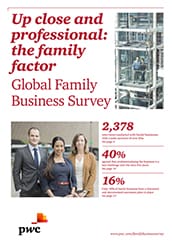
PwC's report looks at what family businesses in 2014 are planning as they look to professionalise the business and family while competing in an increasingly ..
PwC’s report looks at what family businesses in 2014 are planning as they look to professionalise the business and family while competing in an increasingly global, complex marketplace.

Home · About · Sign Up · Become a Member · Services · Events · March 12th Event · March 26th Event · May 1st Event · May 6th Event · 2015 FBA Awards.